


Choosing between engineered wood and solid wood flooring can feel like a major decision. While engineered wood is great for moisture-prone areas, quick installation and budget-conscious buyers, solid wood is a beautiful investment that lasts a lifetime and can even improve the value of your property.
While they look almost identical when installed, performance, durability and suitability for different spaces vary. Find everything you need to know in this guide.
At a glance:
| Feature | Solid Wood | Engineered Wood |
| Material | One piece of hardwood | Hardwood veneer over plywood core |
| Appearance | Natural grain, classic | Looks like solid wood |
| Stability | Prone to expansion | More dimensionally stable |
| Underfloor Heating | Not recommended | Suitable |
| Water Resistance | Low | Higher |
| Refinishing | Multiple times | 1-2 times max |
| Installation | Nailed or glued | Can be floated or clicked |
| Cost | Higher upfront | More cost-effective |
| Lifespan | 30-100+ years | 20-50 years |
| Maintenance | Regular refinishing possible | Easier day-to-day care |
| Sound | Heavier, richer acoustics | Slightly lighter sound profile |
| Sustainability | Lower yield per tree | Higher yield |
What is engineered wood flooring?
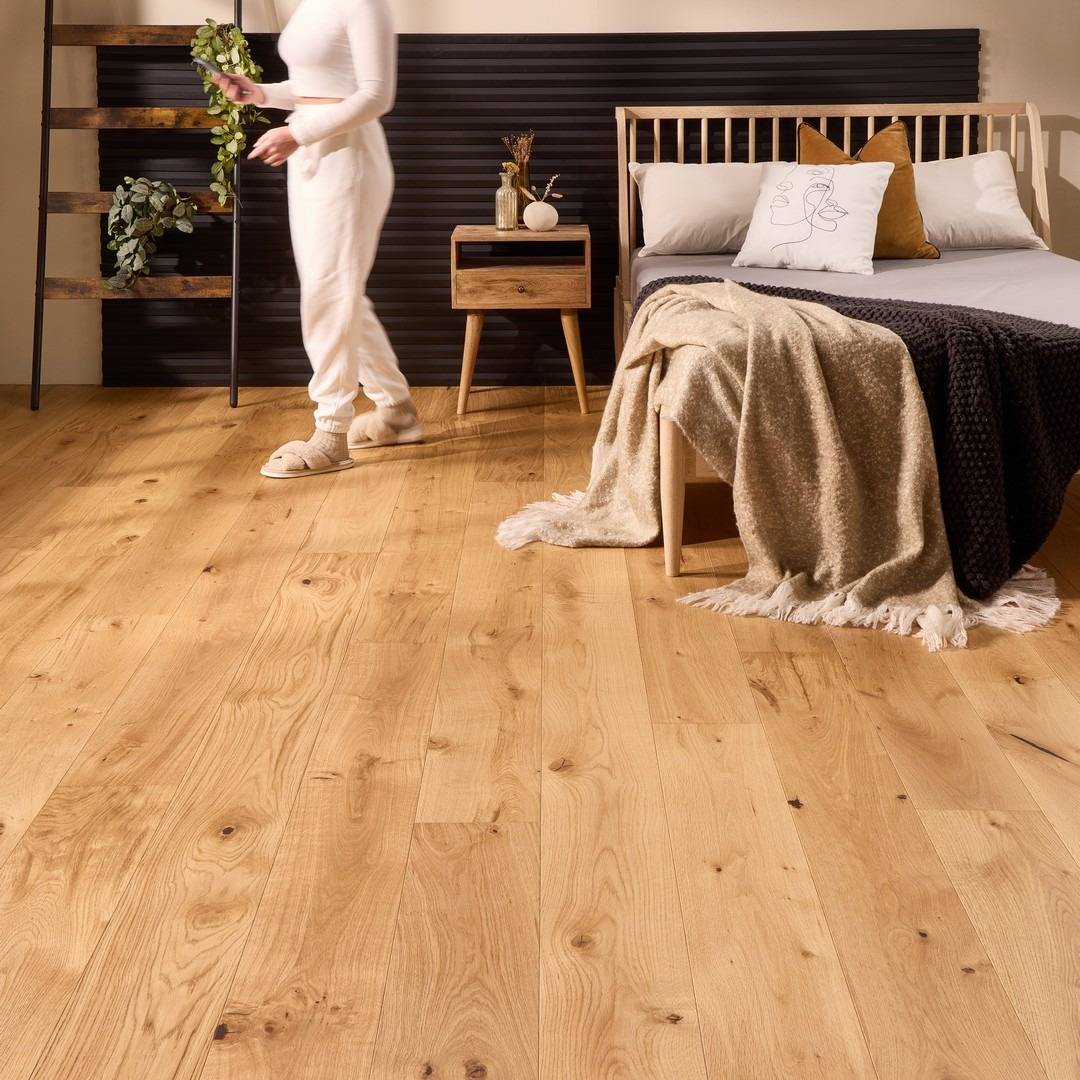
Engineered wood flooring is built with a real hardwood top layer and multiple layers of high-density plywood underneath. This gives you the look and feel of solid wood, with added stability. This means it’s less likely to expand or contract with humidity and temperature changes. It comes in lots of different colours and finishes.
What is solid wood flooring?
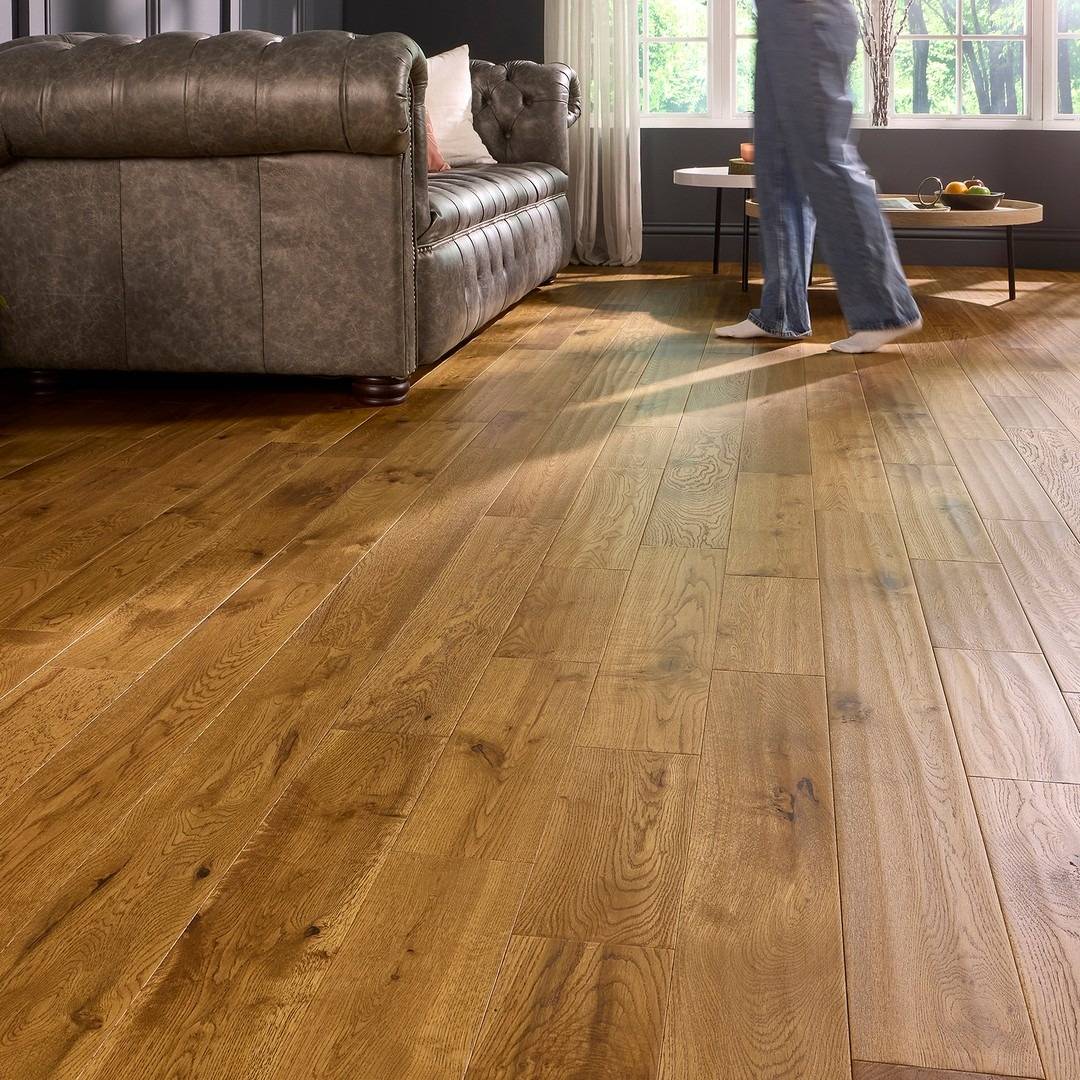
Solid wood flooring is just what it says on the tin - a single piece of hardwood plank. Solid wood is beautiful and can be refinished as needed to last decades. It’s more sensitive to moisture and temperature changes which can lead to warping if not maintained properly.
What’s the difference between engineered wood and solid wood flooring?
Both of these flooring types are made from real wood and can look pretty much identical once installed. However, their performance, durability and suitability for different spaces vary. Let’s break down the core differences:
Stability
As a natural material, wood can be sensitive to changes in temperature and humidity. With flooring, this can lead to warping if not managed.
Engineered wood is more stable in fluctuating humidity, thanks to its layered core. While solid wood is more prone to movement and expansion, especially in areas with high moisture levels like bathrooms or kitchens.
Verdict: Engineered wood floors are more stable so better suited to rooms with higher moisture levels.
Durability
Both solid and engineered wood flooring is highly durable. Solid wood can be sanded and refinished again and again, meaning it can last lifetimes if well cared for. With engineered floors, the top hardwood layer (or wear layer) is available in different thicknesses. Generally speaking, the thicker the top layer, the more durable it is.
A floor with a 6mm wear layer can usually be refinished many times, just like solid wood. A 3mm wear layer can be refinished once, while a 4mm layer can be refinished a couple of times.
Verdict: Both floor types are super durable.
Sustainability
It depends how you look at it.
While some might argue that, as engineered wood uses less hardwood per plank, it’s a more resource-efficient choice. However, real wood floors can last a lifetime, so they could be considered the more sustainable flooring option as they won’t need to be replaced. Solid wood can also be reclaimed and repurposed to extend its lifecycle.
Verdict: Engineered flooring uses less trees but solid wood lasts forever.
Look and feel
Both types offer beautiful, real-wood aesthetics. However, purists may prefer the character and unique grains of solid hardwood.
Solid wood planks tend to be shorter and slightly more random lengths, while engineered wood is more uniform and can come in longer or wider planks.
For a more contemporary look, you may want to consider wider engineered wood floor planks for a clean, seamless finish. Wider planks can also make smaller rooms feel bigger!
Verdict: Engineered wood offers more variety in plank size, but solid wood has authentic warmth and character.
Engineered wood vs solid wood cost
There’s no getting around this one - solid wood is a luxury option and is more expensive than other flooring types. That being said, there are ways to get it at a great price. By manufacturing our own solid flooring products and selling them directly to you, we can sell the same quality products you’d find on the high street at reductions of up to 60%.
Our engineered wood flooring products range from £20 - £60 per square metre. Our solid wood flooring products range from £40 - £50 per square metre.
Verdict: Engineered wood flooring is a fantastic way of getting the look of solid wood for less.
Ease of installation
Solid wood flooring can be installed in two ways; nail down and glue down. The right installation technique often depends on the subfloor below. If the subfloor is timber, you will likely need to nail down the flooring.
Some engineered flooring is incredibly easy to install as there are different types which don't require glue or nails. Tongue and groove systems and click lock engineered flooring means each panel simply fits neatly together.
Verdict: Click-lock engineered wood systems are easiest to install yourself.
Lifespan
When lovingly looked-after, solid hardwood floors can last up to 100 years! Whereas well-maintained engineered flooring can last around 50 years.
Verdict: Solid wood flooring lasts longer.
Maintenance and cleaning
Day-to-day care is similar for both with dry sweeping and vacuuming. However, solid wood can be sanded and refinished more often if it needs a refresh.
Read our solid wood floor cleaning guide for more information. Or check out our engineered wood flooring maintenance guide. Verdict: Both are easy to upkeep - with engineered wood slightly taking the lead.
Sound
While both flooring types are pretty quiet, solid wood flooring has better sound absorbing properties.
Verdict: Solid wood absorbs sound better.
Suitability with underfloor heating
If you already have or want to install underfloor heating, then you’ll need to opt for engineered wood floors as solid wood isn’t usually compatible. Engineered wood allows for safe heat transfer and deals better with changes in temperature.
Verdict: Choose engineered wood floors with underfloor heating .
Water resistance
Engineered wood handles moisture better, making it suitable for kitchens and basements. Solid wood is best in dry, stable environments.
Verdict: Engineered wood is best in rooms that might get wet.
Sizes
Thanks to its stable core, engineered wood comes in a wider variety of sizes, including wider planks.
Verdict: Engineered wood comes in a wider variety of sizes.
Resale value
Stained, creaky flooring can be disconcerting to potential buyers. Whilst hardwood flooring is an investment, it’s one that pays dividends when it’s time to sell.
Verdict: There’s not too much in it but solid hardwood flooring can add more resale value .
Suitability for your space
For areas with higher humidity or moisture like bathrooms or kitchens, engineered wood might be a wiser choice as it copes better with changeable conditions. High traffic areas like hallways are well suited for solid wood as they can be resanded to freshen up the finish.
Verdict: Choose engineered wood for bathrooms, kitchens and conservatories.
Which is best - engineered wood or solid wood?
Both of these flooring types make a great, durable investment for your home or business. Which is best comes down to the room it’s going in, your budget and personal preferences.
The best choice depends on your priorities:
- Choose engineered wood for versatility, budget-friendliness and moisture resistance
- Opt for solid wood if longevity, tradition and multiple refinishes matter most
Want to see and feel the difference? Order free samples to compare styles, grains and finishes in your own space.
[Insert image of wood floor in home]
Ask an Expert! FAQs about engineered and solid wood flooring
Still have questions about choosing the right wood flooring for your space? Our experts are on hand:
What are the advantages of engineered wood over solid wood?
- Greater moisture resistance, easier installation, compatibility with underfloor heating and often a lower price point.
Which is better for pets?
- Engineered wood with a tough finish like lacquer offers more scratch resistance. That said, no wood is completely pet-proof.
Which is more scratch resistant?
- It depends on the finish.Lacquered finishes on engineered wood can be more durable than oiled finishes on solid wood.
Does engineered wood look like real wood?
- Yes. Engineered wood has a real hardwood top layer, so it looks and feels like solid wood once installed.
Ready to Choose Your Wood Floor?
We offer a large selection of quality wood flooring products, all sold direct to you to keep costs down. The same products and factories used by other high street chains - without the middleman. Shop our best solid wood flooring options Explore our engineered wood flooring collections Need help deciding? Contact our flooring experts or order a free sample today.