





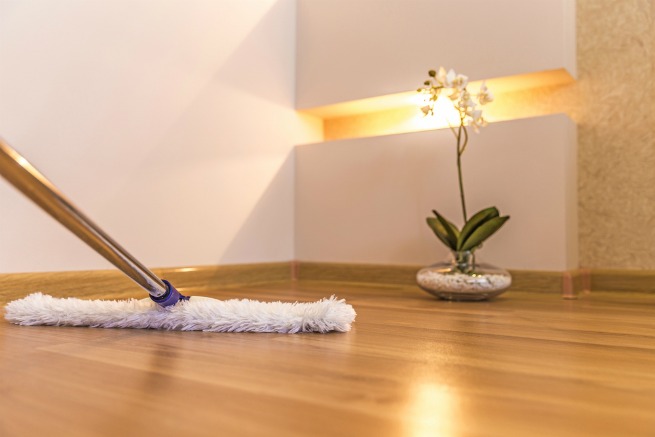
One of the best things about engineered wood floors is how easy it is to keep them clean. Because who wants to spend hours sweeping and scrubbing? Engineered wood floors are designed to handle busy, everyday life, which is why they make a great choice for kitchens and hallways. If you’re feeling a little unsure about how to clean your new floors safely, or are looking for ways to give your older floors a refresh, you’re in the right place. Our guide covers how to clean engineered wood flooring , how often to do it, and the best products and tools to keep it looking its best.
At a glance:
- Following our experiment, swab results showed that vacuuming is the most effective cleaning method for wood floors, reducing bacteria by 99%.
- We recommend a monthly general clean and a yearly deep clean to keep your floor looking good for years to come.
- Avoid steam mops, harsh chemicals, baking soda and excessive water to protect the finish and longevity.
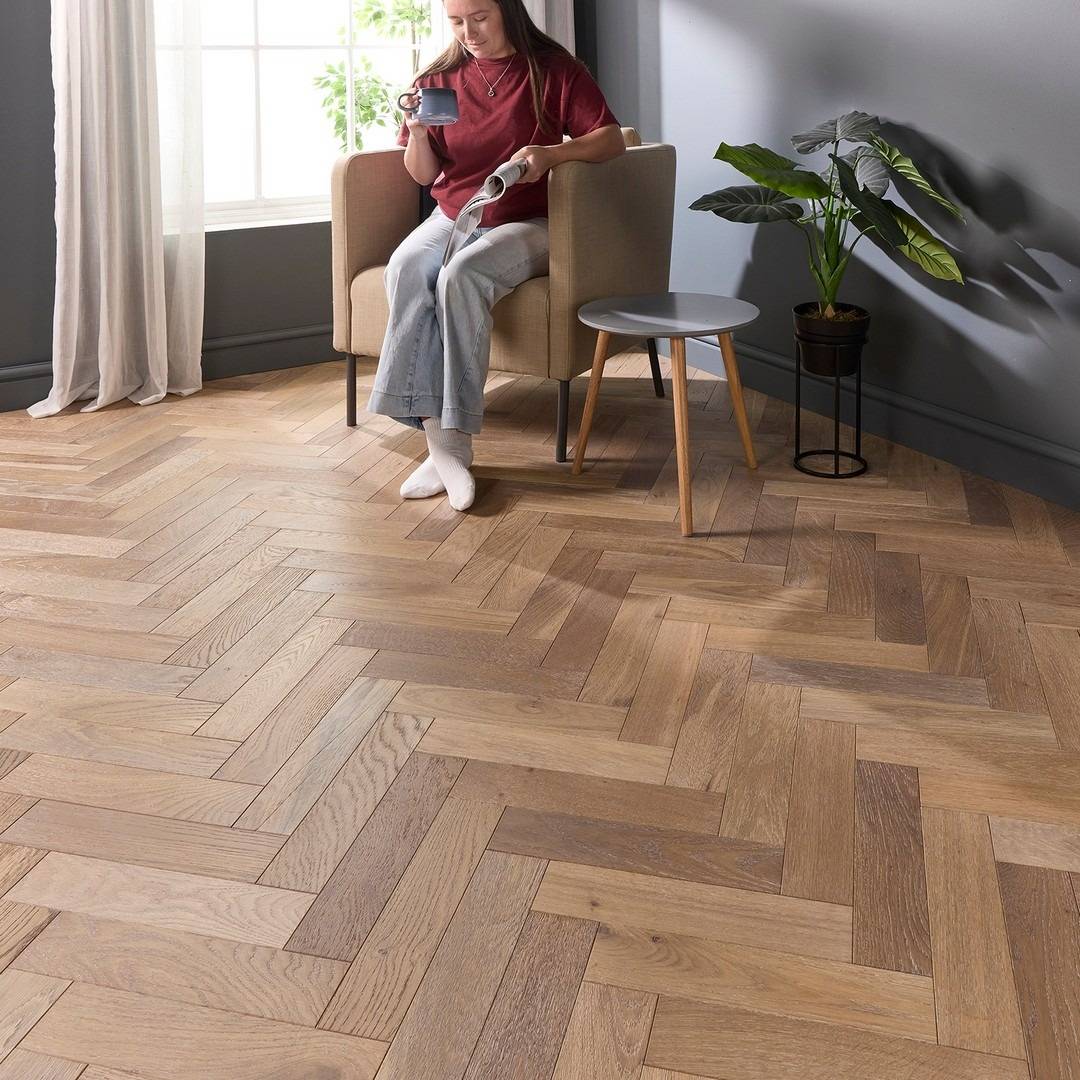 Product Highlight (Above): Herringbone Parquet 18mm Engineered Wood Flooring Smoke White Brushed Oiled
How often should engineered hardwood floors be cleaned?
One of the big advantages of engineered wood flooring is how low-maintenance it is. But whether you’re a neat freak or take a more relaxed approach, every engineered wood floor needs a little routine care. We’ve laid out the optimum cleaning schedule to keep it looking new for longer:
| Frequency | Cleaning task |
| Daily | Sweep or vacuum; wipe up spills immediately. |
| Weekly | Light damp mop with pH-neutral cleaner; clean in the direction of the grain. |
| Monthly | Perform a general maintenance clean for surface dirt and grime. |
| Yearly | Deep clean to remove stubborn dirt; prepare surface for re-oiling if needed. |
Daily
All your engineered floor needs each day is a quick sweep and the occasional wiping up of spills. It’s best not to leave liquid sitting on the surface, as moisture can seep into joints over time. Crumbs and grit act like sandpaper and can cause tiny scratches, so regular removal keeps the finish in great condition.
- Sweep or vacuum on hard-floor mode (brushes lowered — no rotating bar)
- Wipe any spills as soon as they occur
Weekly
Weekly cleaning keeps the surface looking fresh and removes built-up dust, oils and bacteria.
- Mix a pH-neutral wood cleaner with warm water (follow label instructions)
- Lightly dampen your microfibre mop - never soak it
- Work in the direction of the grain
The main thing to remember is to go light on the water - you only need a slightly damp mop.
Deep clean
Every so often, show your floor some extra TLC. A deeper clean removes stubborn dirt and prepares the surface for re-oiling. What you do depends on the type of finish:
- Lacquered engineered wood floors : use a wood floor polish to revive shine and protect against minor scuffs
- Oiled engineered wood floors : apply a maintenance oil to nourish the wood and keep the surface hydrated
This step helps prevent dullness and keeps your floor looking richer for longer - important if you want your floor to last up to 25 years.
What’s the best cleaner for engineered wood floors?
In an experiment we commissioned, swab results showed that vacuuming is the most effective cleaning method for wood floors, since it reduced bacteria by a staggering 99%. We were surprised to find floor wipes were the least effective of six cleaning methods we tested, eliminating just 46% of germs on average. However, they were pretty effective against bacillus, a bacteria type most commonly found in bathrooms, hallways and staircases. According to the results of our experiments, a vacuum cleaner is your first choice, followed by a lightly damp microfibre mop.
Best products
When choosing a cleaner, look for labels that say “pH neutral,” “wood floor safe,” or specifically mention engineered wood floors. Great types of cleaners include:
- pH-neutral wood floor cleaner (safe for all finishes)
- Oiled wood floor soap (for oiled engineered wood only - it cleans and nourishes the surface)
- Lacquer-safe cleaners (preserve the protective coating and shine)
Always dilute concentrates exactly as instructed on the bottle. Too much product can leave streaks or create residue that dulls the finish. Shop floor cleaning products.
Best cleaning tools
Engineered wood loves soft, non-abrasive tools that trap dust rather than push it around. Ideal tools include:
- Vacuum with a hard floor setting - brushes lowered; rotating bristles off
- Microfibre mop - the safest option; use lightly damp, not wet
- Soft broom or microfibre dust mop - lifts grit that can lead to scratches
- Soft cloths or microfibre pads - for spot cleaning spills immediately
“If you're vacuuming wood floors, opt for a soft brush attachment and a hard floor setting, use crevice tools to clean between the grooves and avoid rotating brushes or beater bars. That's because these are typically too abrasive for hard floors and could scratch the surface." - Graeme Shelley, Managing Director, Factory Direct Flooring
What should you not put on engineered hardwood floors?
If you have wood floors, step away from the baking soda. While it can be a great cleaning ingredient for other household chores, never use it on real wood. This is because baking soda is abrasive, which can leave scratches on your floors. It can also eat away at wood sealants. Never use:
- Steam mops – moisture + heat can cause warping and peeling
- Vinegar, lemon juice, baking soda or other DIY acidic cleaners can dull the finish and damage the seal
- Wax or polish on lacquered floors creates slippery build-up
- Bleach or ammonia-based cleaners can strip protective finishes
- Excess water can seep into joints and cause swelling
Remember: Engineered wood needs gentle cleansing, not harsh scrubbing.
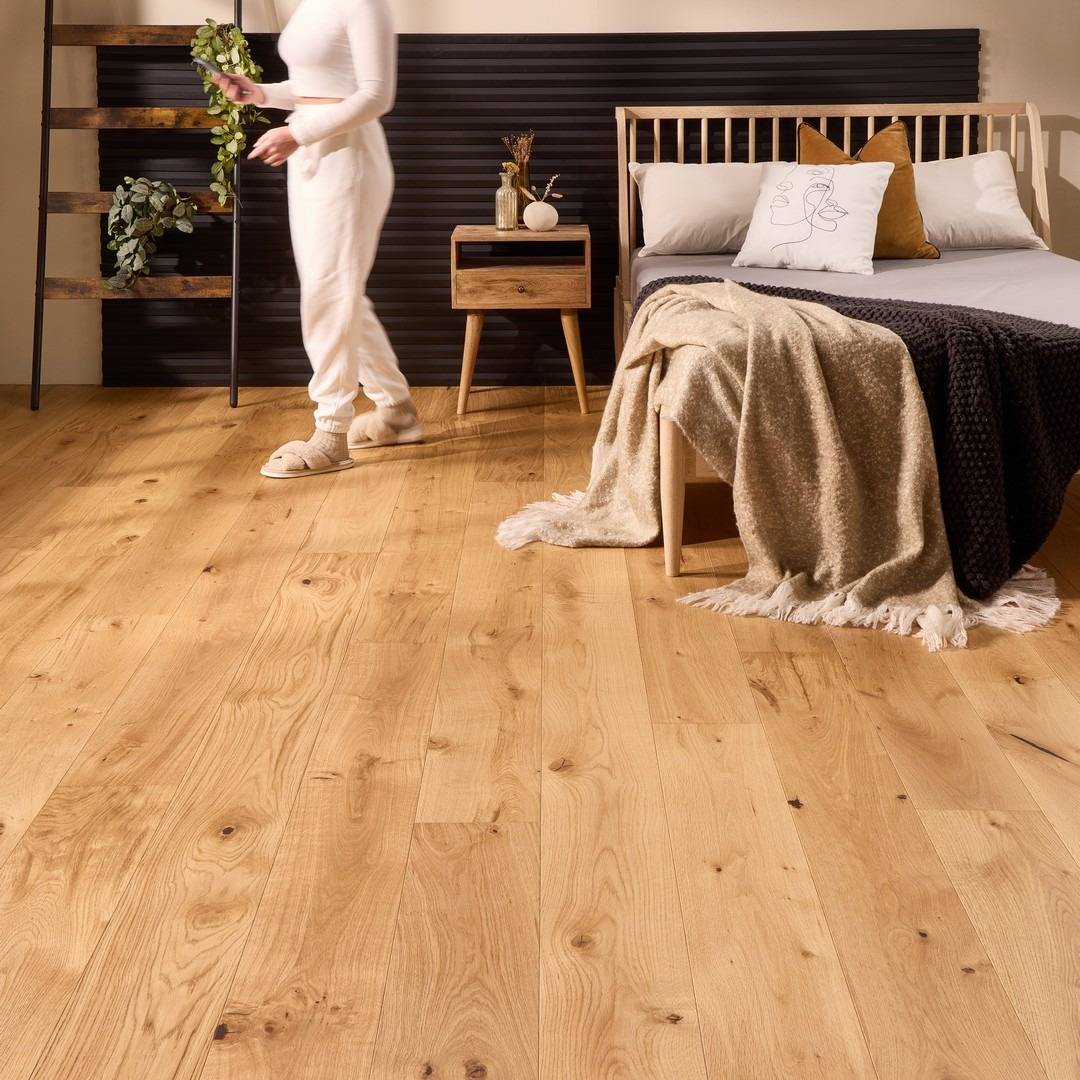 Product Highlight (Above): Abbey Bornem Engineered Wood Flooring 14mm x 190mm Natural Brushed Uv Oiled
Even with careful cleaning, engineered wood floors can face everyday challenges. Here’s how to protect and maintain engineered wood floors like a pro .
-
Use felt pads to minimise scratches
Small scratches are often caused by grit, furniture or pet claws. To minimise them:
- Place felt pads under furniture legs and avoid dragging heavy items.
- Use a microfibre cloth and gently buff light scratches.
-
Avoid stains by acting fast
Spills happen, but acting quickly prevents permanent damage:
- Blot liquids immediately with a soft cloth - don’t rub, as this can spread the stain.
- For oily or sticky spills, use a damp cloth with a pH-neutral cleaner and wipe in the direction of the grain.
- For stubborn marks, a specialised wood floor cleaner designed for oiled or lacquered finishes is safest. Avoid abrasive scrubbing.
-
Project against UV rays
UV rays can fade or darken engineered wood over time:
- Use blinds, curtains, or UV-protective window films to minimise direct sunlight exposure.
- Rotate rugs and furniture occasionally to ensure even colouring across the floor.
- Consider finishes with UV inhibitors, which provide extra protection against sun damage.
-
Save your floors till last
We spoke to Aaron Christensen, Resident Cleaning Expert at Homeaglow to get some more cleaning expertise:
“Save your floor for last or it’ll be dusty and dirty again by the time you finish cleaning everything else. Attack your cleaning in this order: lighting and high fixtures first, then windows and mirrors, surfaces and sinks. Finish with your floors.”
- Aaron Christensen, Resident Cleaning Expert at Homeaglow
-
Colour code your cloths
“Another mistake is using the same cleaning cloth for the entire house. This can spread bacteria throughout your home. Avoid this by using different colour cloths for different tasks. For example, don’t use the same cloth for wiping down your skirting boards and your toilet.”- Aaron Christensen, Resident Cleaning Expert at Homeaglow.
FAQs: The best way to clean engineered wood floors
Still have cleaning questions? Our experts have answered some frequently asked questions…
How do you clean oiled engineered wood flooring?
Oiled floors require gentle care to maintain their natural finish. Sweep or vacuum regularly to remove dust and grit. Use a slightly damp mop with a pH-neutral wood cleaner or a specially formulated oil floor cleaner. Avoid excessive water, as it can penetrate the wood. Periodically, reapply the appropriate wood maintenance oil to nourish and protect the surface.
How do you clean lacquered engineered wood floors?
Lacquered floors are more resistant to moisture than oiled finishes. Use a microfibre mop dampened with a pH-neutral wood cleaner. Wipe in the direction of the grain and avoid soaking the floor. For stubborn marks, use a wood floor cleaner specifically designed for lacquered finishes.
Can you steam clean engineered wood floors?
Steam cleaning is not recommended. Excessive heat and moisture from steam can penetrate the engineered layers, causing warping, swelling or damage to the finish. Stick to a lightly dampened mop for safe cleaning.
Should you mop engineered wood?
Yes, but always lightly. Use a damp, not wet, mop to prevent water from seeping into the seams. Wring out the mop thoroughly before cleaning, and follow the grain of the wood.
What’s the best mop for engineered wood floors?
A microfibre mop is ideal because it gently lifts dirt without scratching the surface. Flat mops or spray mops with a refillable pH-neutral cleaner are also effective for regular maintenance.
Can I use vinegar to clean engineered wood floors?
Vinegar is acidic and can gradually dull or damage the finish. It’s best to avoid vinegar-based solutions and stick to cleaners recommended for engineered wood.
How often should you oil engineered wood flooring?
Oiled floors benefit from periodic re-oiling, usually every 12–18 months for residential use. High-traffic areas may require more frequent maintenance. Follow the manufacturer’s instructions for the best results.
What’s the best oil for engineered wood floors?
Use a high-quality, natural wood oil designed specifically for engineered floors. Popular choices include hardwax oils, which protect the wood while maintaining its natural appearance.
How do you keep engineered hardwood floors shiny?
Regular dusting and gentle cleaning are key. Avoid harsh chemicals or excessive water. Applying the correct oil or polish recommended for your floor type will restore luster and enhance durability. A quick clean can only do so much. Could your floors do with a refresh? Our wood flooring products are of the same high quality you would expect, just at a more affordable price, thanks to our direct-from-factory model that’s been trusted by our customers for over 30 years. Discover our premium engineered wood flooring, order a free sample and enjoy stunning, long-lasting floors that will elevate your home for years to come.
References and sources: